What Is Sell-Through Rate? (And Why Resellers Get It Wrong)
Sell-through rate measures demand velocity. Learn how to calculate it and why it matters more than price when reselling DVDs.
2/19/2026 - 2 min read
Sell-through rate measures demand velocity. Learn how to calculate it and why it matters more than price when reselling DVDs.
2/19/2026 - 2 min read
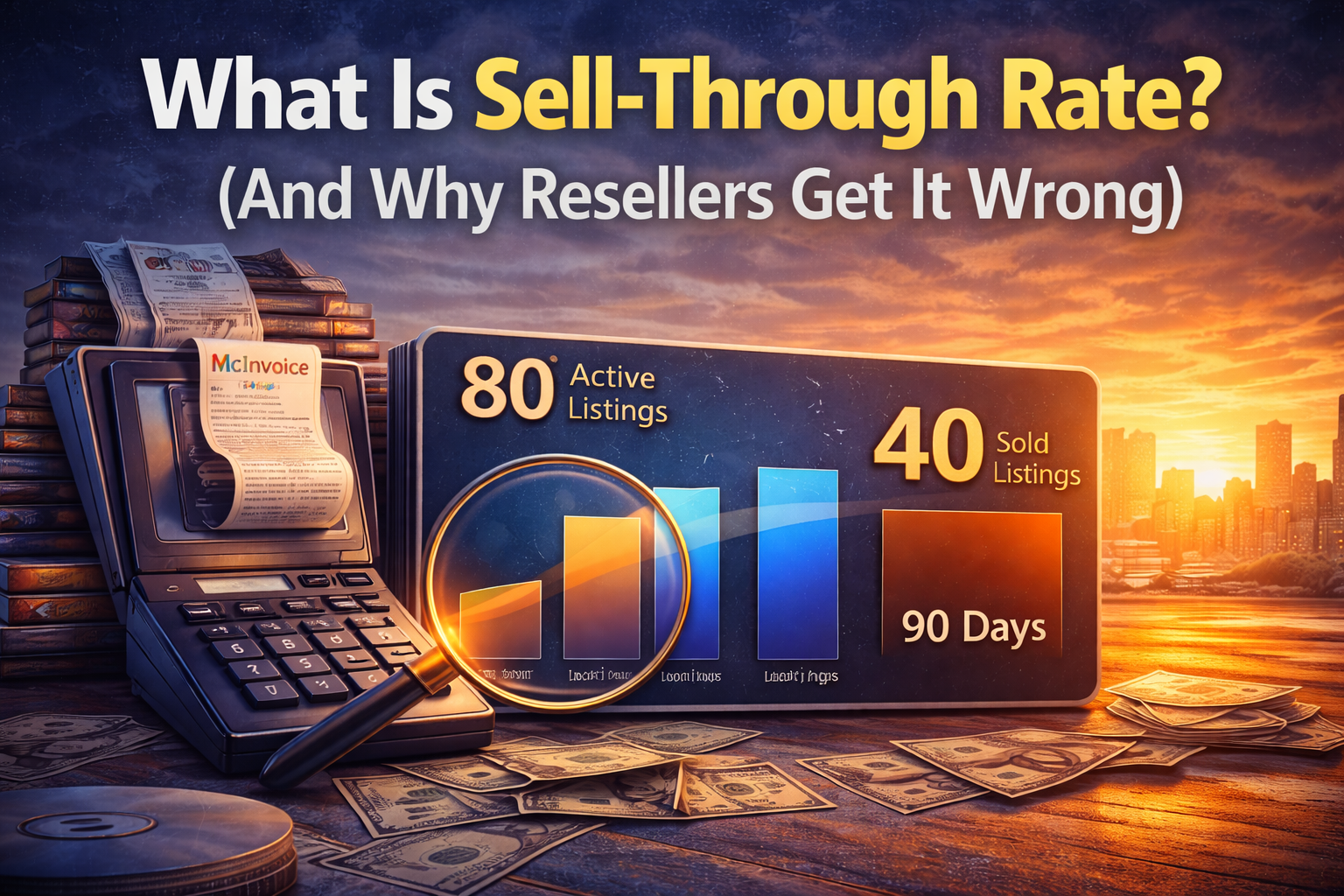
Sell-through rate measures how quickly items are actually selling compared to how many are currently listed.
Sell-through rate = Items Sold ÷ Items Active
If there are:
Your sell-through rate is 40%.
That means nearly half of available inventory is turning over every 90 days.
Price tells you what could happen.
Sell-through tells you what is happening.
TL;DR
Many beginners focus on:
They ignore velocity.
And velocity equals cash flow.
A $15 DVD with strong sell-through is usually better than a $25 DVD that barely moves.
Healthy example:
120 active / 48 sold (90 days) = 40%
Slow example:
600 active / 20 sold (90 days) = 3%
A high price means nothing if supply overwhelms demand.
For DVDs in 2026:
This varies by niche and category, but velocity is always the deciding factor.
Streaming has created oversupply in mainstream titles.
The gap between:
Is wider than ever.
Understanding sell-through allows you to filter noise and focus only on inventory that turns.
If you want to apply this properly, learn how to
check demand before you buy.